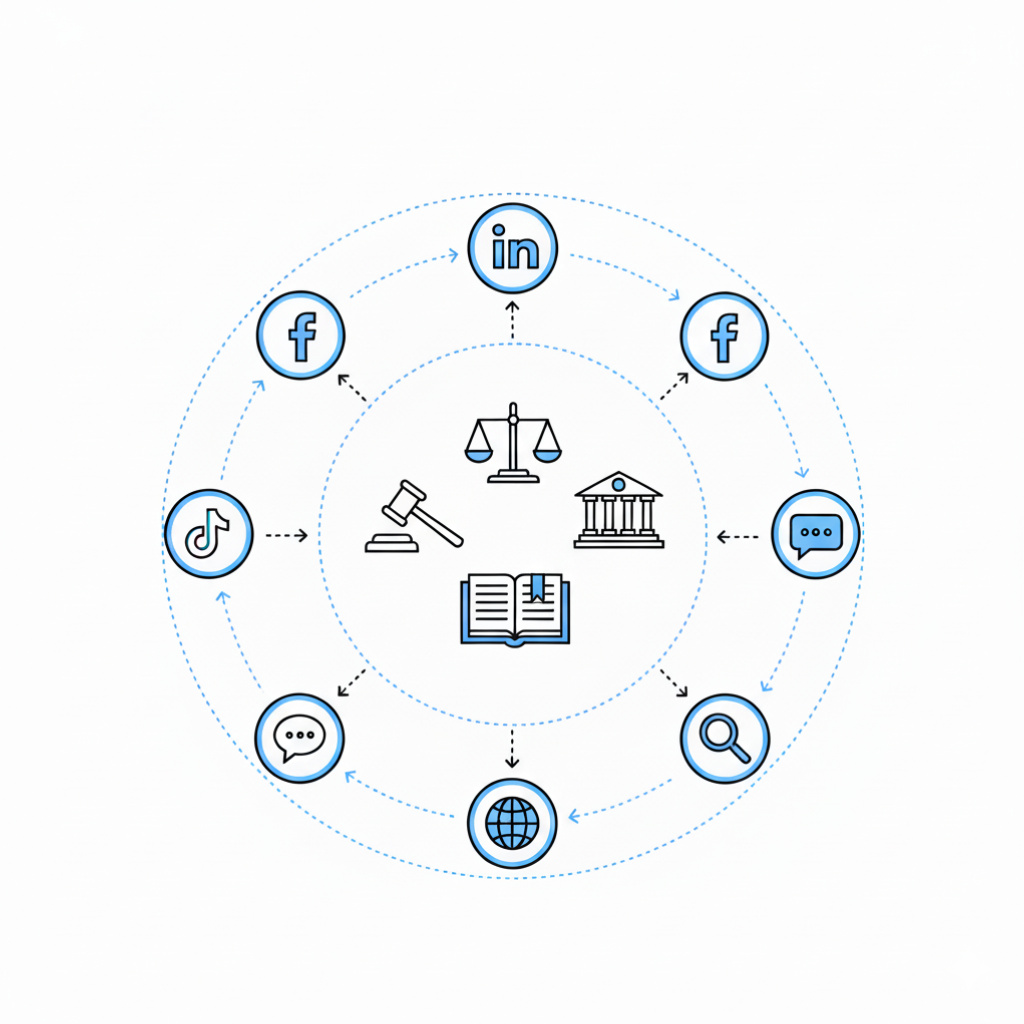
Most people now look for lawyers the same way they look for anything else — they start online. If you don’t have any real visibility there, you’re not even in the running. Social media is one of the better ways for lawyers and firms to get in front of people locally and show they actually know what they’re doing. It’s become a critical component of any modern social media marketing strategy.
Law is different, though. You’ve got ethics rules breathing down your neck, and clients expect you to sound like someone they can trust — not some random marketer. Posting on LinkedIn or Facebook usually just wastes time. You need a plan. One that doesn’t break rules, actually helps people, and doesn’t feel pushy.
In this guide, we cover the key strategies that actually deliver results in social media marketing for lawyers — clear, actionable steps designed to ensure your content builds trust, strengthens valuable relationships, and brings in qualified leads ready to engage your practice.
Why Social Media Marketing Important for Lawyers
First, the “why.” Legal issues are stressful and high-stakes. Clients aren’t just looking for legal knowledge — they want an attorney who seems competent and human. Social media lets you demonstrate expertise while showing personality. Keeping up with the latest social media marketing trends ensures your firm stays visible and relevant.
Regular social media activity lets you:
- Position yourself as a knowledgeable resource;
- Boost your firm’s visibility and website traffic;
- Build relationships with peers and potential referral partners;
- Turn confusing legal jargon into clear, helpful information.
How to Choose Social Media Platform for Lawyer
Not all social media platforms are created equal, especially for the legal field. Your target audience dictates where you spend your time.
1. LinkedIn
LinkedIn matters for pretty much every practice area. PI, corporate, family law—doesn’t matter. It’s where credibility happens. Share what your firm is doing.
Write about recent cases. Get in conversations with local business owners. If you’re doing social media marketing for lawyers and chasing B2B work or wealthy clients, this is your starting point.
2. Facebook
Facebook still commands the largest audience globally. For practices like Family Law, Estate Planning, or DUI defense, it’s particularly effective for local engagement.
You can join community groups where potential clients already gather, share verified client testimonials, and run ads targeted down to specific neighborhoods or zip codes. The geographic precision is what makes it valuable.
3. X (formerly Twitter)
X is the platform for legal news. If you practice in a fast-moving area like Technology Law, Criminal Defense, or Constitutional Law, X allows you to comment on breaking news in real-time. It is an excellent tool for showing that you are current and engaged with the world.
4. Instagram
Instagram doesn’t work for posting complicated legal documents. Focus on the everyday things that show what your firm is really like — team photos from volunteer days, shots after closing a case, or simple office life moments.
Those posts make your brand feel more personal and less corporate. It’s a solid move if your target clients are younger people or if your practice leans into lifestyle and personal vibes.
How to Create Social Media Marketing Content Strategy
The legal industry is heavily regulated regarding advertising and solicitation. Your content strategy must walk the line between being promotional and being informative. The “Know, Like, and Trust” factor is paramount.
1. Educate, Don’t Advertise
Attract clients by offering value, not guarantees. Steer clear of promising specific outcomes like “I’ll win your case.”
Position yourself as an authority by answering common client questions instead:
- “3 Things to Do Immediately After a Car Accident”
- “Understanding the Difference Between a Will and a Trust”
- “What Businesses Need to Know About New Employment Laws”
This strategy demonstrates expertise ethically and effectively.
2. Use Video Content
Short-form video drives significantly higher engagement than text or images alone. A lawyer explaining one legal concept for sixty seconds, filmed simply, often reaches thousands of viewers.
It is a practical application of social media marketing for lawyers that leverages how people currently consume information.
3. Client Stories and Case Studies (Anonymized)
Past client stories, properly anonymized and shared with permission, connect with people facing similar issues. It is one thing to list your practice areas. It is another to show someone the journey you can guide them through.
Best Social Media Marketing Practices for Lawyers
Social media is a minefield for the unprepared lawyer. One wrong move can lead to ethical complaints or a breach of client confidentiality.
Maintain Confidentiality at All Costs
The duty of confidentiality applies to all digital interactions. Avoid discussing any specifics of an ongoing case, even hypothetically. Innocent details can combine with public information to identify a client.
Beware of the “Review” Trap. If a former client posts a review, a simple “thank you” is usually safe. Delving into case specifics to explain the outcome breaks confidentiality. Keep responses generic and move detailed discussions to a private channel.
Avoid Creating an Attorney-Client Relationship
Social media has a real risk — casual messages can accidentally create an attorney-client relationship. A prospect DMs their issue. You reply with particular guidance. A judge could decide a relationship existed, triggering professional responsibility even without a retainer or fee.
Disclaimers are essential. Put them where people see them: bio, About page, pinned post. State it directly: “Content on this account is for general information purposes only. It is not legal advice. Messaging us or viewing posts does not form an attorney-client relationship.”
The rule for responses is firm. No specific legal advice in private messages. Use this exact reply instead: “We’d like to discuss your situation further. Call our office at [number] to set up a confidential consultation.”
This approach is especially important for practice areas with urgent inquiries, where someone searching for a Car Accident Lawyer may contact multiple firms and expect prompt, professional guidance without receiving legal advice through social media.
Do Not Guarantee Results
Every jurisdiction’s rules on lawyer advertising ban promising or guaranteeing results. Cases turn on their own facts. Claiming a certain outcome is unethical, and it builds false hope in clients. You can’t even hint at it with labels like “The Best Lawyer” or “The Winner.” Shift attention away from results entirely. Talk about the work instead — your process, how hard you prepare, years handling similar matters.
Phrasing changes everything. Drop “I’ll get you the maximum compensation.” Say “I will work diligently to protect your interests and pursue every available recovery.” Replace “We never lose” with “We bring thorough preparation and strong experience to every case.”
Transparency in Advertising and Endorsements
When boosting posts or running ads, comply with bar rules and platform policies. Clearly label them as advertisements where required. If paying influencers or friends for shares, disclose that relationship. Deceptive marketing damages your standing with the public and the bar.
Manage Your Online Reputation Proactively
Your digital footprint matters. Regularly audit your online presence — even personal accounts. Assume nothing is private.
Don’t argue with negative comments publicly. Acknowledge them politely and move the conversation offline.
Example: “Please contact our office manager at [email] so we can address your concerns.”
Measuring Success and Adjusting Your Approach
Monitoring is required to ensure the strategy produces value.
If you want consistency without losing billable hours, a virtual legal assistant can handle the operational work that keeps social channels compliant and active—drafting first-pass posts, scheduling, and routing inbound messages to the right next step. That way, you stay focused on client work while your online presence stays steady and professional.
Social media marketing for lawyers requires data to guide decisions. Using robust social media marketing tools can help aggregate this data for clearer insights. Examine platform analytics regularly for these metrics:
- Engagement: likes, comments, shares;
- Audience growth: increase in followers;
- Website referrals: clicks leading to firm site content or contact;
- Message volume: inquiries arriving through direct channels.
Identify high-performing content — like video series debunking common myths with consistent views and interaction — and allocate more resources to it. Eliminate or reduce formats that show minimal engagement, such as plain text posts, and redirect efforts toward proven visual or informational alternatives.
Conclusion
The legal market remains highly competitive. Attorneys who succeed adapt to how clients now find and choose representation.
A well-planned, ethical, and regular social media marketing for lawyers strategy helps your practice stand out clearly from others. Whether you manage it in-house or outsource social media marketing to experts or social media marketing agencies, the goal remains the same: develop an online reputation that builds trust early — often before a potential client even schedules that first call.
Select one platform to start. Learn it thoroughly and post valuable content on a consistent schedule. Those ongoing digital contacts gradually lead to signed retainers and help establish you as the primary attorney people turn to in your area.