Most people start their search for a doctor online. They want to see who you are before they book. This makes social media marketing for doctors a necessary tool, not an extra. It allows you to educate potential patients and gives your practice a human face. But it is not the same as marketing a regular business.
Ethical boundaries exist. Regulations to follow. If you want to use social media without stepping into trouble, follow this plan. Or outsource social media marketing to people who already know the rules.
Why Social Media Marketing for Doctors is Essential
Why do so many physicians stay off social media? Usually two reasons: privacy and time. Both are valid. But here’s the thing: when you do it carefully, the benefits actually matter. You get to educate people at scale.
Instead of explaining the same condition ten times a week in the exam room, you explain it once online and let it do the work for you. Patients feel more informed, more in control.
And over time, that consistency builds something valuable — authority. People notice which doctors show up with useful information again and again. When they need care, they pick the doctor they already know and trust, not the one they’ve never heard of.
You can’t control what people post on review sites, but you can control what you put out about yourself. Social media is useful for that. It gives you a space to show what you actually do day-to-day, highlight good patient outcomes when patients agree to share, and push back on bad information related to your specialty.
It also lets people see you as more than just a name on a door. When they recognize you from Instagram or Facebook, they tend to be less anxious when they walk into the exam room.
How to Set Goals for Social Media Marketing for Doctors
You should figure out what success looks like before you start posting. Social media for doctors is different from that for regular businesses. You are not selling a physical product. You are selling trust in you and your skills.
Here are the kinds of goals that make sense for doctors:
- Getting more new patients. You want people to click through from social media and book an appointment;
- Teaching people something useful. When you share good information, people start seeing you as an expert;
- Managing how people see your practice. A strong social media presence can balance out the bad reviews that are out there;
- Hiring good staff. If you show what it is like to work at your practice, the right people will apply.
Whatever you pick, make it specific. Do not just say, “I want more patients.” Say something like “I want to increase traffic from Instagram to my booking page by 20% in the next three months by posting one educational video every week.”
Additionally, a paraphrasing tool can help you create unique and engaging content for social media posts. For example, you can take your original message and reword it in different ways to keep your posts fresh and interesting.
How to Choose the Right Platforms for Social Media Marketing for Doctors
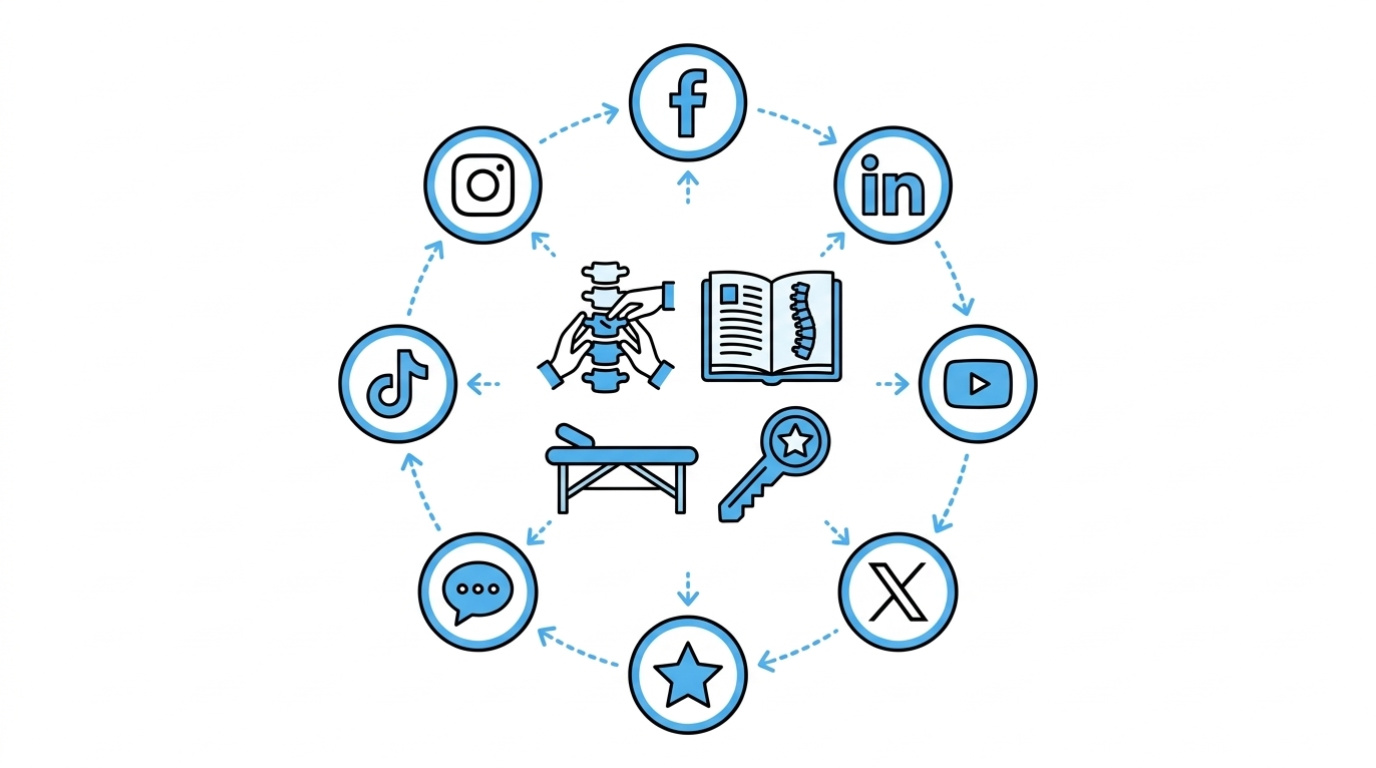
Don’t feel like you have to sign up for every social media site out there. Trying to do it all at once is actually the fastest way to burn out and see no results. If you’re a doctor looking into marketing, the trick is to be selective. Focus on where your specific patients or referral sources are most active.
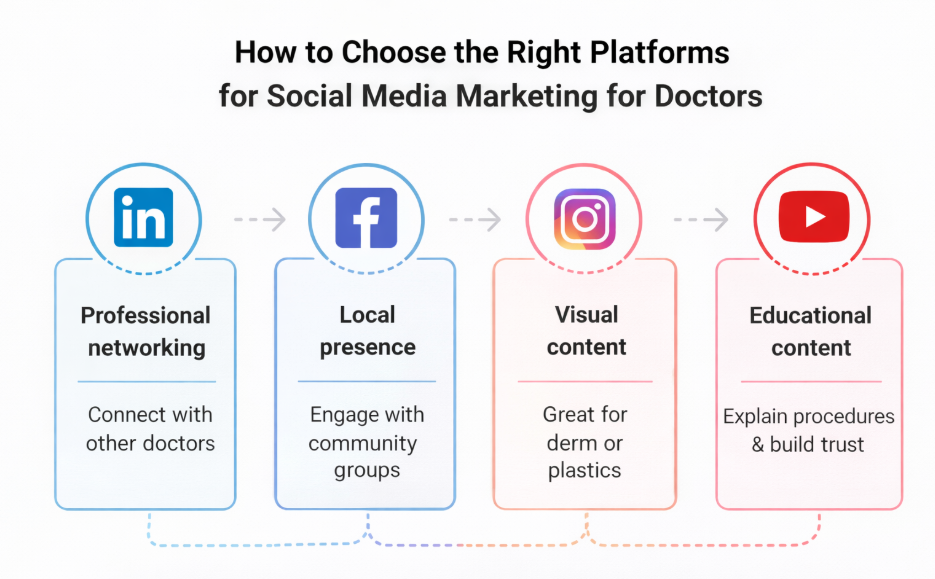
If you’re in a field that relies on other doctors sending patients your way—think surgery or cardiology—this is your spot. It’s built for professional networking, so you can connect with GPs and other specialists directly.
This is your go-to for building a local presence. It works well for family med, peds, and general practice. You can set up a page for your office hours, but the real value is joining local community groups where people are already asking for recommendations.
If you’re in a visual field like derm or plastics, this is where you want to be. It’s great for showing results or posting quick health tips as Reels. It also lets you post casual content that makes your staff feel more approachable.
YouTube
People treat it like a search engine. If you want to explain a complex procedure or post educational content, this builds trust over time better than anywhere else.
Just pick one or two places where your ideal patients are already scrolling. Get really good at those before you even think about adding another platform.
Content Strategy in Social Media Marketing for Doctors
Content is the currency of social media, but in healthcare, it must be used carefully. A strong social media marketing strategy balances educational value with strict adherence to patient privacy laws (like HIPAA in the US).
You need a plan for what you actually post. Here are three types of content that work well for doctors.
- Educational content. This should be most of what you put out. Make posts that bust common myths. Explain the symptoms people ask about all the time. Talk about new research in your field. If you are a cardiologist, post a short video on the difference between good and bad cholesterol. Content like that shows people you know what you are talking about;
- Behind-the-scenes content. Let people see who works in your office. Introduce new staff when they join. Show the team setting up for a community event. Post a quick look at what a normal day looks like for you. It makes people feel like they know you before they ever walk in;
- Patient content. Only do this if you have written permission. But when you do, it is effective. Before and after shots for orthodontics or dermatology. Success stories from physical therapy. Visual proof works.
Crucial Tip: Always include a disclaimer in your bio and on posts stating that the content is for informational purposes only and not a substitute for professional medical advice.
Common Mistakes in Social Media Marketing for Doctors
Even with the best intentions, missteps can happen. Being aware of the pitfalls in social media marketing for doctors is just as important as knowing the best practices.
Violating Patient Privacy
Never mention specific patients without written consent. Even with consent, remove all identifying details. A casual comment about a patient can become a legal problem.
Engaging with Trolls or Negative Comments
Do not argue in comments. If someone posts something wrong or says something about you, do not engage. Delete it or ignore it. Online arguments do not help your reputation.
Inconsistent Posting
Posting a bunch at once and then disappearing makes your page look dead. Consistent posting, even if less frequent, works better.
Overselling
If your page is just ads for your practice, people will lose interest. Post useful information. That is what brings people in.
What Metrics Matter in Social Media Marketing for Doctors
To determine if your strategy is working, you must look at the data. However, vanity metrics (like likes) don’t always pay the bills. When analyzing social media marketing for doctors, focus on these key performance indicators (KPIs):
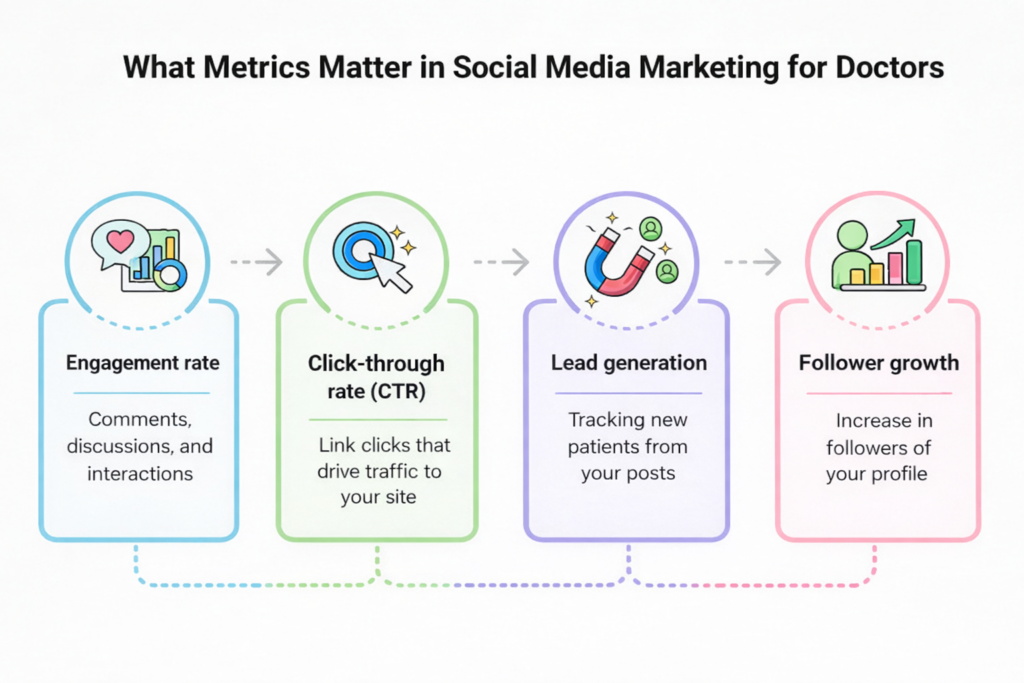
- Engagement rate: Real interaction—comments and discussion on your posts—tells you people are actually listening;
- Click-through rate (CTR): If someone bothers to leave the app to visit your site, they’re likely shopping for a provider;
- Lead generation: If you can trace new patients back to a specific post or ad, that’s the only metric that really matters in the long run;
- Follower growth: It matters, but it’s secondary to actual patient conversions.
Tools for Social Media Marketing for Doctors
Running a practice and posting manually usually fails. You need a system. Here are the tools to do it faster:
- Canva: Professional graphics, no designer needed. Healthcare templates available;
- Buffer/Hootsuite: Pre-schedule a month of content to publish automatically;
- ContentStudio: Tracks trending healthcare topics so you know what to post about;
- Audacity / CapCut: Free, easy-to-learn tools for basic audio and video editing.
For a more detailed breakdown of platforms that can help simplify your workflow, check out this list of social media marketing tools.
Conclusion
People look for health information the same way they look for restaurant reviews now—online. So if you’re a doctor wondering where to connect with potential patients, the answer is usually Instagram or Facebook.
The reality is that you have to show up regularly without sharing anything private. It takes time, but if you focus on educating people rather than selling to them, you’ll build a reputation that actually brings people through your door.