Social media marketing happens without you. Your customers already talk, share, and form opinions where billions gather daily. Their conversations define modern brands. Tools exist to navigate this reality. These platforms turn noise into strategy, providing structure for the chaos of digital interaction.
Successful marketers operate from a single command center. They manage global campaigns, analyze sentiment, and engage communities not from scattered browser tabs but unified dashboards. These tools centralize control. They automate the repetitive. They reveal the actionable. This is how a lone brand voice cuts through the endless digital chatter.
What is Social Media Marketing
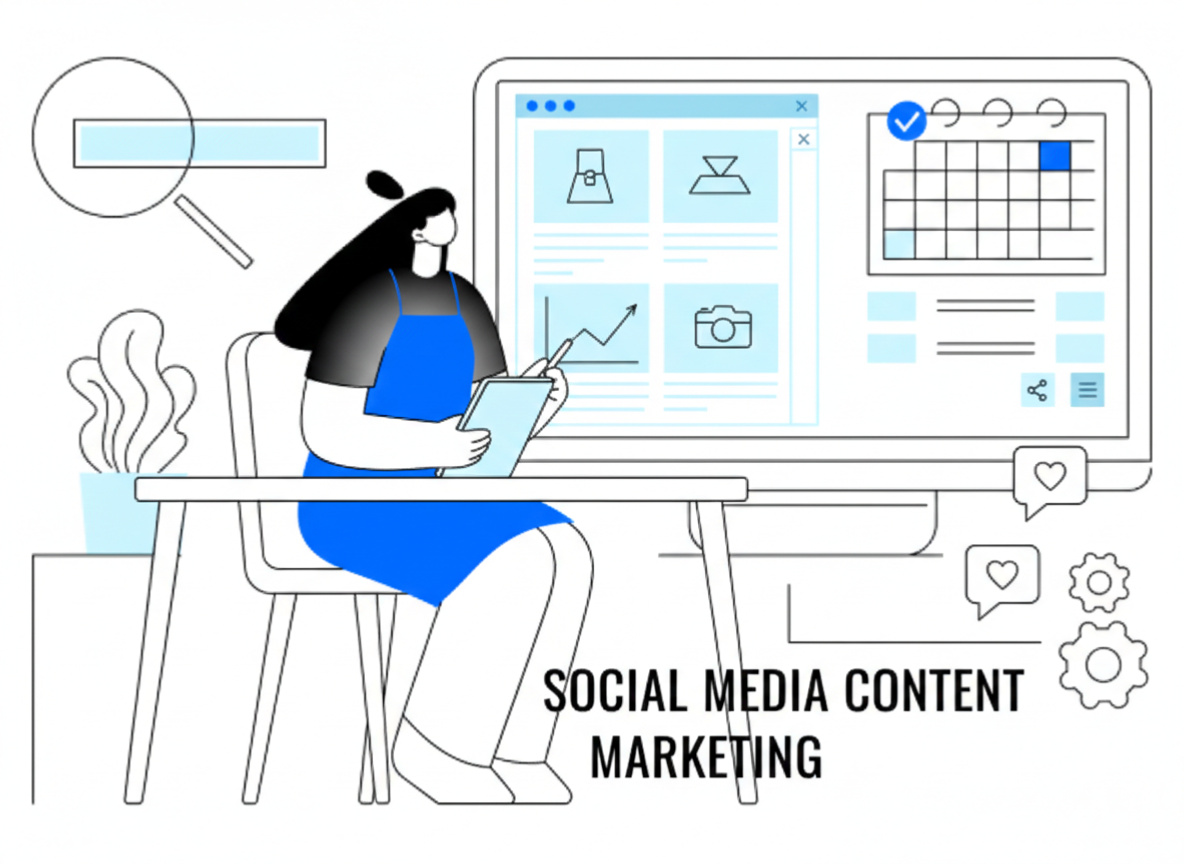
Social media marketing involves promoting a business using online platforms. It creates content for engagement and brand growth. This process builds direct audience relationships through consistent communication. Paid advertising on these networks targets specific user groups precisely. Every action aims for measurable results.
Analytics guide the entire strategy. Marketers listen to public conversations and adapt. The field requires constant testing of messages and visuals. Community interaction proves vital for lasting success. Real time feedback loops change how companies operate. This marketing form is now fundamental.
Why is Social Media Marketing Important
It directly connects brands with billions of potential customers daily. Traditional advertising cannot match this scale or specificity. Social media marketing turns viewers into active participants and vocal supporters. A strong presence builds trust and shapes modern brand reputation. People discover companies through these platforms first. The cost for reaching a precise audience remains relatively low, which matters for budget planning.
In 2026, platforms such as TikTok have become essential for reaching younger demographics. For example, when promoting your brand through short-form videos, it’s vital to optimize your profile including add link in TikTok bio so followers can instantly access your website, landing page, or lead capture funnel.
Beyond profile optimization, marketers increasingly use specialized TikTok search tool platforms to discover trending content, analyze competitor strategies, and identify viral patterns before they saturate the algorithm, gaining critical insights that inform content creation and hashtag strategies.
Competitors are already there, engaging, making silence a significant risk.
Data from social campaigns informs broader business decisions. Instant feedback on products is available. Customer service happens publicly, demonstrating care. This marketing drives website traffic and sales conversions efficiently. Its importance is tied to cultural relevance. Brands must exist where life happens online now.
Benefits of Social Media Marketing
A strong social media marketing effort provides a clear return on investment. You gain direct access to an engaged global audience without traditional gatekeepers. Real time performance data, including tracking key performance indicators, allows for immediate strategic adjustment and helps evaluate effectiveness, unlike slower methods. It humanizes a brand through consistent voice and visual storytelling. Organic community growth can lead to powerful advocacy, reducing long term advertising costs.
Analyzing social media data provides valuable insights for refining strategies and understanding audience behavior.
Primary benefits include:
- Enhanced brand awareness and top of mind recognition;
- Improved customer service and public relationship management;
- Higher quality traffic directed to your website or store;
- Valuable market research gathered from audience interactions;
- Increased sales conversions through targeted promotional activity, using sales data to optimize campaigns.
To measure success and prove social ROI, it is important to use analytics and customizable reporting tools that demonstrate the effectiveness of your social media marketing and communicate tangible results to stakeholders.
Advanced AI social media marketing tools also improve ROI by combining engagement data with interactive user inputs, helping teams optimize campaigns based on real audience behavior rather than assumptions. AI social media marketing tools transform raw engagement data into predictive insights by analyzing patterns across millions of posts to recommend optimal posting times, content formats, and messaging angles that historically drive the highest conversion rates within your specific audience segments.
These intelligent platforms automate labor-intensive tasks like A/B testing caption variations, generating image alt text for accessibility, suggesting trending hashtags relevant to your niche, and even drafting initial post concepts based on your brand voice and campaign objectives—freeing marketers to focus on strategy and creative direction rather than repetitive execution.
5 Pillars of Social Media Marketing
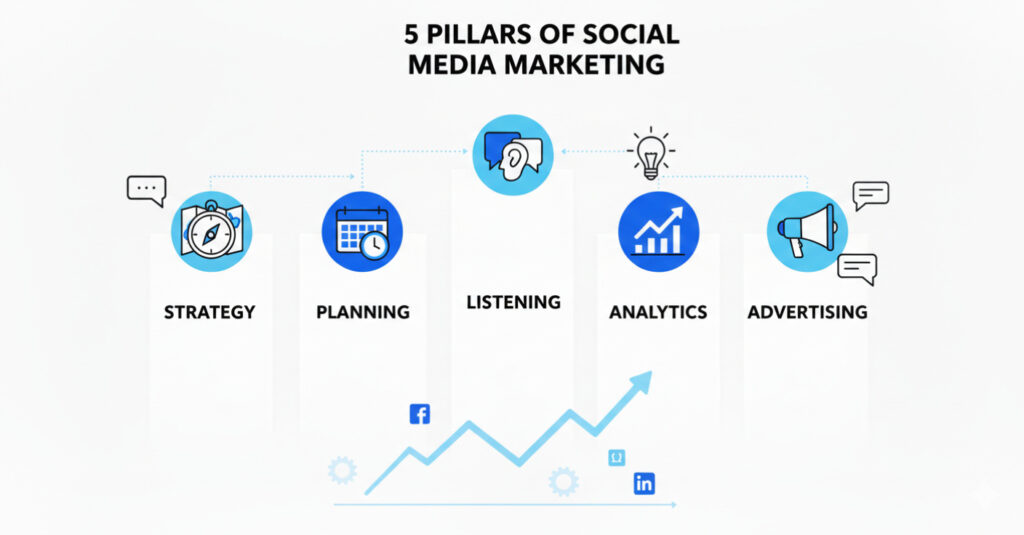
Effective social media marketing rests on five interconnected pillars. These components form the basic structure of any professional strategy.
Strategy
A defined plan must come before any creative post. This pillar sets measurable goals and identifies the specific audience. It determines which platforms will receive focus and resources. Strategy aligns online activity with broader business objectives clearly.
Planning and Publishing
Consistent activity requires a content calendar. This organizes themes, post formats, and timing for optimal visibility. Scheduling tools ensure regular publication even during offline hours. Good planning balances promotional content with engaging material.
Listening and Engagement
Brands must monitor conversations about their industry. This means actively reading comments and mentions across networks. Prompt responses to questions or feedback build community trust. Engagement turns passive followers into active participants.
Analytics and Reporting
Every post generates performance data. This pillar involves tracking metrics like reach, engagement, and conversion. Numbers reveal what content truly resonates with the audience. Regular reporting proves the value of the effort and guides future adjustments.
Advertising
Paid campaigns extend organic reach significantly. They allow precise targeting based on demographics, interests, and behaviors. Social advertising can test messages and drive specific actions like website visits or sales. This pillar accelerates growth and provides scalable results.
Influencer Marketing
Influencer marketing connects brands to established communities. The right partner provides immediate access to a receptive audience. Select influencers based on aligned values, not follower totals. Authentic advocacy from a trusted voice inspires tangible action.
Campaigns drive superior traffic and leads when executed with precision. Success depends entirely on audience alignment. Evaluate content quality and engagement data. These metrics reveal true influence.
Platforms exist to streamline identification and management. They track performance across collaborations. Integrate these partnerships into wider social efforts. The result is expanded reach and durable customer relationships.
Brand Voice and Identity
A consistent brand voice builds immediate recognition. This voice, defined by its distinct tone and language, must not waver between platforms. Trust grows from this familiarity.
Visual identity works in unison with that voice. Your logo, chosen colors, and recurring imagery form a cohesive system. It reflects what you value. This clarity helps you stand apart in a crowded space. Content becomes more engaging as a direct result.
Using a reliable logo maker helps you create a professional, scalable logo that aligns with your brand personality and ensures visual consistency across all channels. Brand consistency extends beyond surface-level aesthetics to encompass messaging frameworks, customer service approaches, and value propositions that remain recognizable whether someone encounters your brand through Instagram stories, LinkedIn articles, customer support emails, or in-person interactions at trade shows.
Inconsistency creates cognitive dissonance that erodes trust—when your Twitter account uses casual, humorous language while your website adopts corporate formality and your sales team employs aggressive tactics, customers subconsciously question which version represents the “real” brand, undermining credibility and making them hesitant to commit to purchases or partnerships.
Every single interaction either strengthens or weakens this identity. A quick reply, a shared image, a helpful comment. These moments accumulate. They foster loyalty and slowly build a community of advocates. That community drives sustainable growth.
Prioritizing Social Customer Care
Social customer care happens in public view. Responding quickly to questions and complaints demonstrates commitment in real time. This public resolution builds trust directly on the platform.
Establish systems to monitor every channel for messages and mentions. Use tools to track your speed and the sentiment of replies. Prioritize prompt, professional handling for all interactions.
Each routine exchange becomes a critical trust-building opportunity. Strengthen audience relationships one reply at a time. This daily practice fundamentally shapes your brand’s reputation.
Audience Segmentation and Targeting
Segment your audience. Analyze demographics, interests, and observed behaviors. This analysis allows for content that speaks directly to specific needs. Social platforms provide advanced tools for delivering these tailored messages.
Use platform data and track key metrics like engagement and traffic. Refine your segments continuously. A data-driven approach focuses effort on groups most likely to convert. This improves both engagement and financial return. Precise targeting makes content more relevant. It directly serves broader business goals.
Social Media Marketing Examples
Real campaigns show the application of social media marketing principles in practice. These examples illustrate effective social marketing in action, highlighting how leveraging social data and analytics can measure campaign performance, demonstrate ROI, and enhance strategic decision-making across various organizational departments. These examples demonstrate strategic creativity across different industries.
Duolingo’s TikTok Persona

Source: https://www.businessinsider.com/duolingo-tiktok-language-learning-memes-duo-owl-2021-11
The language app developed a unique brand voice on TikTok. Its mascot, Duo the owl, became an unhinged, trending character. This approach involved commenting on popular videos and creating original skits. Engagement skyrocketed as users shared the content widely. It proved that consistent, platform specific personality drives organic growth. The campaign made a educational tool culturally relevant and widely discussed.
Starbucks’ User Generated Content
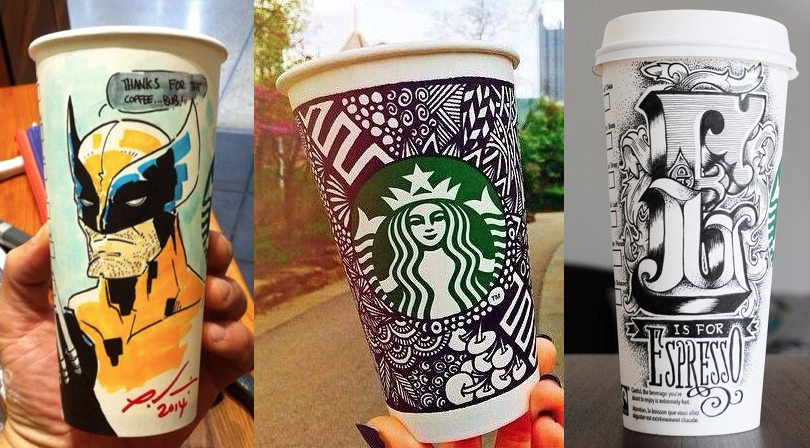
Source: https://wedevs.com/blog/141859/user-generated-content-campaigns/
Starbucks often turns customers into brand creators. Their iconic seasonal cup designs prompt massive photo sharing online. The annual #RedCupContest encourages artistic submissions for prizes. This strategy generates authentic visual advertising without major production costs. It fosters a strong sense of community and seasonal excitement. User content fills social feeds with free, credible promotion.
Wendy’s Roasting on X (Twitter)
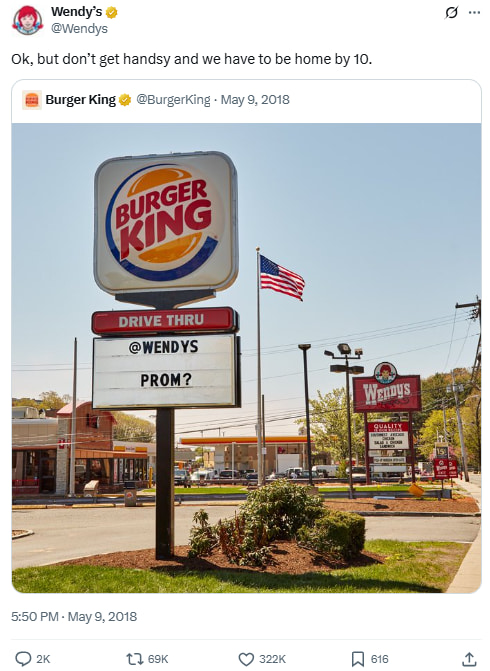
Source: https://x.com/Wendys/status/994228211075768321
The fast food chain adopted a distinct sarcastic tone. Wendy’s account famously trolls competitors and engages with followers playfully. This bold voice cuts through typical corporate communication. It generates significant media coverage and viral moments. The approach demonstrates how a brand can build loyalty through entertainment. Their activity shows the power of consistent, engaging communication in real time.
Social Media Marketing Statistics
- Global ad spend on social media reaches $219 billion this year, claiming nearly one-third of all digital advertising dollars (Newmedia);
- Worldwide, 5.42 billion people use social media platforms (Agorapulse);
- Marketers allocate 16% of total budgets to social media efforts. Some teams push higher, chasing video trends (Agorapulse);
- Average engagement rate across platforms hits 1.8%. Short videos pull the strongest responses (Newmedia);
- TikTok posts average 3.70% engagement, surging 49% from last year (SocialMediaToday);
- 72% of consumers discover brands first through social media feeds (Newmedia);
- Instagram draws 70% of marketers, edging out Facebook at 69.6% (HubSpot);
- 26% of marketers test direct sales on platforms like Instagram shops. Results vary by audience age (HubSpot).
What are Social Media Marketing Tools
Social media marketing tools streamline posting schedules, track engagement metrics, analyze audience behavior across platforms. Teams depend on them to manage dozens of accounts without chaos. Some focus purely on visuals. Others dig into conversation monitoring or ad performance. Brands pick tools based on team size, budget constraints, specific platform priorities. Free versions exist for starters. Paid plans unlock automation features that save hours every week.
Certain tools generate captions through AI, design graphics in minutes, pull competitor insights automatically. Jasper writes post copy fast when ideas run dry. Canva handles quick visuals for non-designers. Hootsuite or Buffer queue content days ahead.
MyContentBridge takes a different approach — built for frontline teams in healthcare, government, and franchises, it routes employee-generated posts through approval workflows so nothing goes live without sign-off.
Analytics-focused tools like Sprout Social and Socialbakers provide granular performance reporting that connects social media activity to business outcomes, tracking metrics like follower growth velocity, engagement rate trends, optimal posting times, and content performance by format—revealing that carousel posts outperform static images for your specific audience or that LinkedIn drives higher-quality B2B leads than Twitter despite lower overall engagement numbers.
Sprout Social catches every mention before it fades. Metricool crunches real-time data for small agencies. Tools evolve constantly. One choice rarely covers everything perfectly.
Top 6 Social Media Marketing Platforms
Marketers pick Instagram most often in 2026. Around 70% include it in strategies. Visual posts drive product discovery for 61% of users. Reels keep pulling high views. Younger crowds scroll here daily. Brands test shop features aggressively.
Facebook still holds massive reach with 3.07 billion monthly users. 69.6% of marketers run campaigns here. Ads deliver solid ROI according to 28%. Groups build loyal communities fast. Older demographics stay active. Reach grew sharply last year.
YouTube
YouTube ranks high for business impact. 68% of leaders say it delivers results. Shorts grab quick attention. Long videos build trust over time. Mobile views dominate completely. Marketers push educational content hard.
TikTok
TikTok surges with over 1.6 billion users. Engagement hits 3-5x higher than some rivals. 52% plan bigger budgets soon. Short videos spark trends overnight. Gen Z discovery happens here first. Authenticity wins big.
LinkedIn leads B2B efforts. 85% call it top performer. Professional networking drives leads. Comments spike engagement now. Ads target decision-makers precisely. 65% use it for promotion. Growth keeps accelerating.
X (formerly Twitter)
X reaches real-time conversations. Marketers use it for quick updates. 27% stay active here. News spreads instantly. Engagement varies wildly by topic. Some brands focus on polls. Daily users hit 250 million.
Social Media Marketing Tips and Best Practices
Influencer marketing thrives on authentic connection. Choose partners whose community mirrors your ideal customer. Follower count is a weak metric. True engagement creates real impact. Your content strategy must be multi-format. Videos, posts, and articles serve different purposes. Combine them. Track everything with clear metrics. Data shows what works. Then you can adjust.
Visual storytelling captures attention quickly. It communicates complex ideas in an instant. Let this principle guide your creative choices. Ask for feedback. Run simple contests. Share content from your users. This participation builds a community around your brand. It transforms customers into loyal supporters.
Agility matters more than a perfect plan. Monitor trends and adapt your resources. Refine your approach based on what the numbers tell you. Incomplete tests can still provide valuable direction. Prioritize personalized care in every interaction. Consistency in your response builds lasting trust. This daily effort shapes your brand’s reputation more than any campaign.