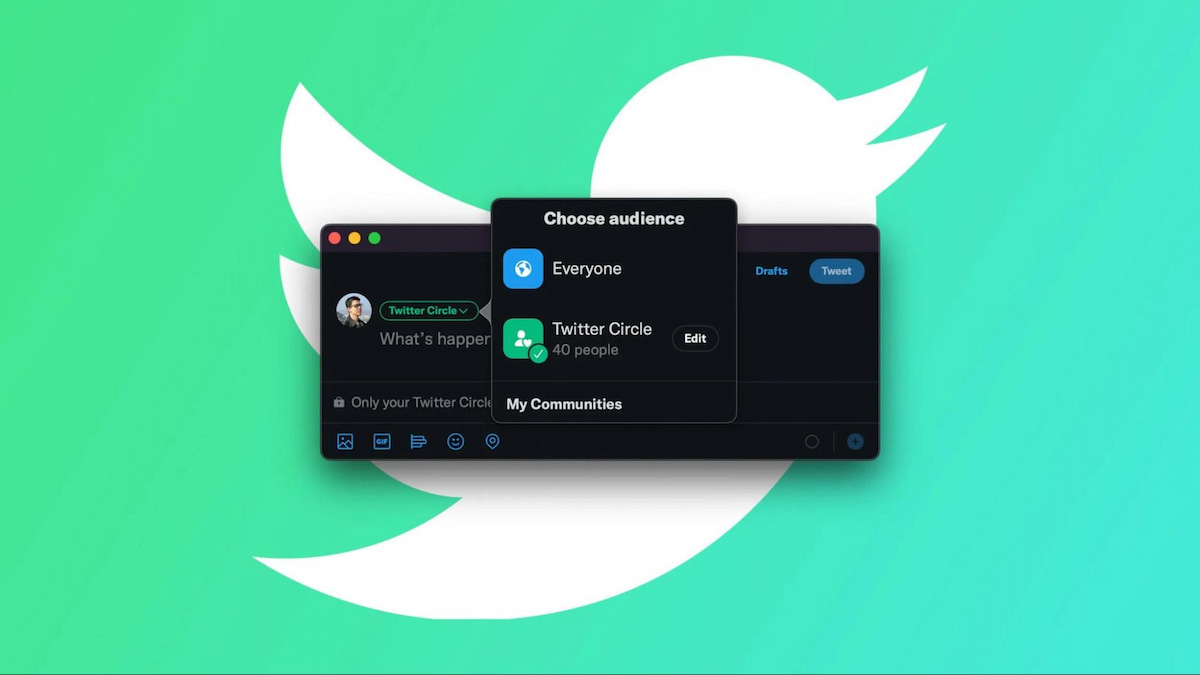
Private audience features are really important across social media as people want more control over who sees their content. It’s especially relevant for creators and niche communities that prefer smaller discussions. Twitter Circle has let users share their content with a special group of people. It was a space for more personal conversations and interactions.
After the platform rebranded to X, several legacy features were removed, including Twitter Circle. We will tell you more about why it happened and the top alternatives for private sharing.
What Was Twitter Circle?
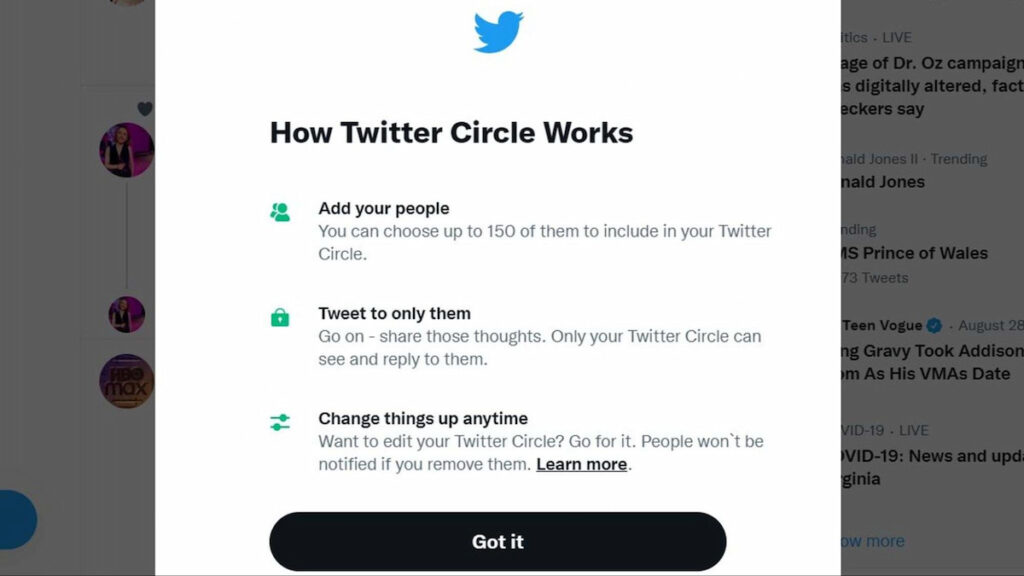
Twitter Circle was introduced as a functionality that makes conversations on the platform feel more personal and controlled.
Users could create a smaller audience for selected posts instead of tweeting publicly to all followers. This feature allowed them to have semi-private conversations.
“Just because something is publicly accessible does not mean that people want it to be publicized.” – “Making Sense of Privacy and Publicity”
It functioned similarly to a “close friends” list on other social platforms. You could manually select who to include in their Circle and decide which tweets to share with that group.
Some of the key functionalities were
- Adding up to 150 users;
- Sharing with selected members;
- No public retweets;
- Limited replies and discussions.
It gave you greater control over audience segmentation without needing multiple accounts.
This feature quickly became popular because it solved several common frustrations associated with public posting. People appreciated it for better privacy and more casual posting.
Why Did Twitter Circle Disappear?

Twitter Circle disappeared during the rebrand into X. It slowly received less visibility and updates after the ownership change. This platform eliminated the feature as part of its restructuring process.
Why did it happen?
Low Adoption Compared to Public Posting
A lot of activity on the platform revolved around public tweets and viral engagement. Circle had a loyal user base, but it was never a mainstream behavior across the platform.
Public content generated more engagement through interactive content and higher ad visibility. Brands today also rely on UGCify to increase authentic engagement through user-generated content and social proof across digital platforms. Plus, it had much better platform-wide interaction metrics. So, Circle didn’t align with the broader growth priorities of X.
Platform Strategy Changes
The platform focused on becoming an app centered around creators and monetized engagement after the shift to X branding.
This direction prioritized
- Public reach;
- Paid visibility features;
- Creator monetization tools;
- Long-form and video content;
- Algorithm-driven discovery.
Private audience posting tools became less important within that ecosystem.
Focus on Communities and Monetization
Also, X started pushing features, like
- Communities;
- Premium subscriptions;
- Subscriber-only content;
- Creator monetization programs.
These systems encouraged marketing and monetizable audiences rather than maintaining smaller groups.
Subscription ecosystems and public creator engagement offer more revenue opportunities than limited private tweeting.
Technical Moderation Challenges
Managing semi-private content at scale can create moderation complications. The Twitter Circle feature introduced more complexity around
- Content visibility controls;
- Reporting systems;
- Privacy enforcement;
- Audience restrictions;
- Abuse monitoring.
Maintaining reliable privacy boundaries and moderating harmful content increased operational challenges for the platform.
What Replaced Twitter Circle on X?

X emphasizes features that align more with its evolving business model. The platform shifted away from private social posting and focused on public engagement and large community interactions.
This transition changed the overall experience of the platform. Twitter Circle allowed you to post casually to trusted people. Once the feature disappeared, users had to rely on different tools that covered only part of this feature.
Here are some of these replacements within the X ecosystem.
X Communities
X Communities are a primary solution for smaller interactions. They allow you to engage with groups focused on specific topics and passions.
The component encourages more focused conversations that might otherwise get lost on the public timeline. Key features include
- Public and semi-private group discussions;
- Dedicated feeds around specific topics;
- Community moderation tools;
- Audience separation.
Communities are not truly private, unlike Twitter Circle. They remain publicly discoverable, and discussions are for group participation. The environment feels closer to a forum or discussion board than a private social circle.
Subscriber-Only Posts
Subscriber-only content is another major replacement for private audience engagement.
Subscribers can view exclusive posts and conversations unavailable on the public timeline. This alternative works especially well for
- Independent creators;
- Journalists;
- Educators;
- Influencers;
- Niche industry experts.
They can use this feature to share early announcements and private commentary. This exclusivity creates a stronger sense of community.
Protected Accounts
Protected accounts are the simplest privacy alternative after Twitter Circle removal. Only followers you approve can view your posts and replies.
Many people started using these accounts because they offered something Circle could not fully guarantee. They give account-wide control over visibility.
However, protected accounts lack flexibility. Circle allowed users to switch between public and private posting whenever they wanted. Your entire profile becomes private with protected accounts.
Group DMs
Group direct messages are another practical replacement for smaller conversations on X. It’s especially useful for people who used Circle to communicate with close friends or collaborators.
Group DMs create a more immediate and conversational environment. Members can exchange messages in real time and share media privately. Brands, communities, and event organizers also use tools like Walls.io to embed a Twitter feed that displays curated X posts, hashtags, and live audience conversations in real time.
This functionality is the closest replacement for Circle because it preserves the feeling of communicating within a trusted group. Friend circles and professional collaborators all migrated toward these interactions after Circle’s removal.
Yet, Group DMs do not replicate the social-posting experience that made Circle unique.
Top 5 Alternatives to Twitter Circle
Many people migrated toward platforms that offered stronger privacy controls and smaller communities. They don’t want to expose every post to public algorithms and viral audiences.
So, we gathered some alternatives that support private interaction and more controlled audience visibility.
| Platform | Privacy Level | Audience Limit | Best Use Case | Monetization Options |
|---|---|---|---|---|
| Instagram Close Friends | High | Flexible follower selection | Personal social sharing | Creator partnerships |
| Discord Private Servers | Very high | Large scalable communities | Niche groups and creators | Memberships, integrations |
| Telegram Private Channels | High | Large audiences | Broadcast communities | Subscription channels |
| WhatsApp Communities | High | Medium to large groups | Trusted contact communication | Minimal |
| Mastodon | Medium to High | Depends on server rules | Decentralized social networking | Limited |
Instagram Close Friends
Instagram Close Friends is a close modern equivalent to Twitter Circle. It recreates the idea of selective audience sharing without requiring a fully private account.
The feature allows you to publish Stories visible only to a chosen list of followers. It became so successful because of its simplicity. The audience management process is pretty straightforward.
Close Friends is especially popular among
- Younger social media users;
- Lifestyle creators;
- Friend groups;
- Influencers who want personal engagement.
However, Instagram’s system still differs from Twitter Circle. Circle focused more on text-based conversation and public integration. Close Friends offers visual storytelling through Stories and media content.
Discord Private Servers
Discord evolved beyond its gaming origins and became a platform for private communities and niche group interaction.
Private Discord servers allow you to build controlled spaces with detailed moderation systems and role permissions. You can organize discussions into separate sections.
Creators and online communities favor Discord because it supports
- Long-term audience building;
- Live engagement;
- Live voice discussions;
- Exclusive member spaces;
- Community moderation.
The platform also feels more community-oriented than driven by algorithms. This type of engagement closely reflects marketplace network effects, where active users and discussions help strengthen retention and attract new participants organically. Each member of the community shapes the conversations. Yet, it requires more setup and active management than Twitter Circle.
Telegram Private Channels
Telegram is also quite popular among users who want large-scale private communication.
Telegram channels and private groups support big audiences while still maintaining administrative control. You can broadcast updates to thousands of members.
Telegram is common for
- Creator communities;
- News updates;
- Educational groups;
- Private fandoms;
- International communication.
Its encryption options and moderation tools also offer you more privacy.
WhatsApp Communities
WhatsApp Communities focus on trusted interactions based on your contact list. It is fundamentally different from Twitter, but it also creates a level of privacy.
WhatsApp Communities organize related group chats under one larger structure. Most interactions happen between real-world contacts. So, conversations tend to feel more personal and practical.
This platform offers strong mobile accessibility and a familiar user experience. Yet, WhatsApp doesn’t let you broadcast thoughts to your audience. It functions more as a communication tool around existing relationships.
Mastodon Private Posts
Many former Twitter users like Mastodon for its transparency around privacy and moderation.
It operates through independently managed servers. So, you can choose different visibility settings for individual posts.
Mastodon also creates a space for more intentional and community-led discussion. Conversations here are less focused on driving viral reach and engagement statistics.
This platform emphasizes user autonomy and shared community governance. However, it relies on a server structure that can be complex for new users.
Conclusion
Twitter Circle encouraged smaller and more personal interactions. However, it didn’t match the X’s shift toward monetization and public engagement. So, they removed this feature from their product suite.
Many people still don’t want to expose every conversation to large audiences and recommendation systems. So, they use alternative private-sharing platforms.
It is important to consider several factors when choosing, including
- Privacy level;
- Reliability of moderation tools;
- Audience visibility management;
- Overall community culture.
The end of Twitter Circle pushed people to explore newer and more specialized communities that offer stronger privacy controls.