For decades, accounting firms grew almost entirely through word of mouth. A happy client would recommend you to a friend or neighbor, and the phone would ring. It was straightforward and effective.
But things have shifted. Today, most people check online first before contacting an accountant. If your firm doesn’t show up on LinkedIn, Instagram, or Facebook, many potential clients will simply never find you.
That’s why social media marketing for accountants has become a real necessity — no longer just about occasional updates, but about building trust, demonstrating expertise, and reaching clients where they already spend their time.
In this article, we’ll walk through a practical strategy — from setting goals to tracking results — to help your firm use social media effectively.
Why Social Media Marketing for Accountants is Essential
Plenty of accountants stay away from social media because of compliance concerns or lack of time. These are valid points.
Even so, the reasons to get started are much stronger. First and foremost, it helps you build authority. When a small business owner looks up “tax strategies for LLCs,” you want your name and expertise to appear — not your competitor’s. If you’re not there, someone else definitely is.
Social media allows you to publish bite-sized insights that establish your firm as the local or niche expert. Social media marketing for accountants also helps with humanization. Accounting can feel cold and intimidating. Social media gives your firm a personality—introducing team members, celebrating client wins, and demystifying jargon. Third, cost efficiency.
Compared to PPC ads or direct mail, organic social media offers an incredibly high ROI for the time invested. Finally, client retention. Sharing regular updates keeps your firm top-of-mind year-round, not just during tax season. When a client needs bookkeeping help in July, they remember your helpful posts from June.
How to Set Goals for Social Media Marketing for Accountants
Skip the random posting. Goals like “get followers” only feed vanity metrics. For social media marketing for accountants to work, set SMART goals instead—Specific, Measurable, Achievable, Relevant, and Time-bound. Define success before you hit publish.
Here are four common goals for accounting firms:
- Lead generation: “Generate 15 qualified consultation requests from local business owners via LinkedIn Direct Messages per quarter.”
- Awareness & trust: “Increase profile visits to our firm’s LinkedIn page by 200% within six months by sharing weekly tax tips.”
- Recruitment: “Attract 10 intern applications for the upcoming tax season by showcasing firm culture on Instagram Stories.”
- Client education: “Reduce basic ‘How do I file a 1099?’ calls by 30% by creating a pinned video tutorial series on Facebook.”
Write your goals down and review them monthly. If a platform or content type doesn’t serve these goals, cut it. This discipline prevents “shiny object syndrome,” where firms jump on every new trend without direction.
How to Choose the Right Platforms for Social Media Marketing for Accountants
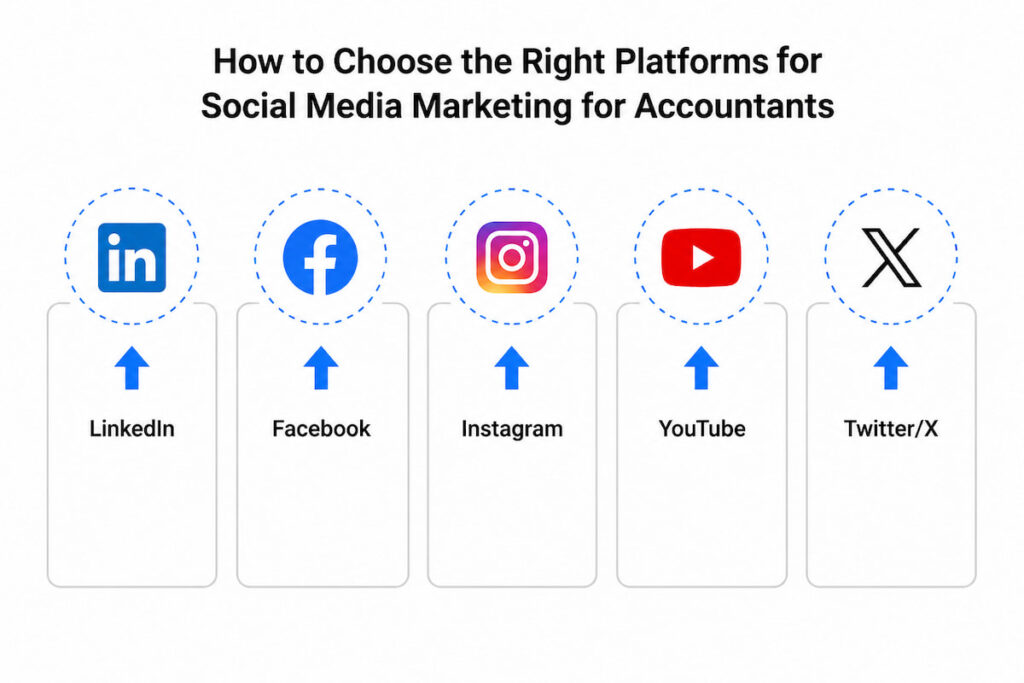
Social media platform selection is not one-size-fits-all. A solo accountant serving older clients would find little value on TikTok, whereas a tech-focused firm might see Facebook as entirely irrelevant.
Here’s a clear guide:
- LinkedIn is the must-have for B2B work. Use it for professional updates, tax insights, and networking;
- Facebook works best for local businesses and individual tax clients — especially with community groups and events;
- Instagram is perfect for showing your firm’s personality through short videos and visual tips;
- YouTube acts as a hidden goldmine for long-term leads with helpful evergreen content;
- Twitter/X suits real-time tax news, but only if you have the right person to handle it.
Master one platform first — usually LinkedIn — before spreading yourself across others.
Content Strategy in Social Media Marketing for Accountants
Social media marketing for accountants works best when it’s strategic, not random. The key is mixing value with personality and promotion. Try following an 80/20 ratio — mostly educational and engaging posts, with a smaller share dedicated to direct offers.
Use these four pillars as your guide:
- Education (60% of posts): Give people useful information. Posts like “5 deductions freelancers forget,” simple explanations of IRS notices, or quick videos on tax forms tend to get good engagement;
- Social Proof (20%): Share real results. Client success stories (anonymized), review screenshots, and before-and-after examples all help build credibility;
- Culture & Behind-the-Scenes (15%): Show the human side — introduce team members, share office moments, or give a glimpse of tax season life. It makes your firm more relatable;
- Promotional (5%): Use these sparingly for calls like “We have a few spots left for quarterly planning” or webinar invites.
Remember, you don’t have to create fresh content every single day. Repurpose smarter: one article can fuel several LinkedIn posts, carousels, and short videos. This keeps things efficient without sacrificing quality.
Common Mistakes in Social Media Marketing for Accountants
Most accounting firms stumble on social media. Steer clear of these six common errors and you’ll already be ahead.
The biggest one is the ghost account — setting up profiles and then disappearing for months. Inconsistent posting tanks your reach. Solution: Plan ahead with a content calendar and prepare posts in batches.
Another frequent issue is using too much technical jargon. Clients tune out fast. Keep it simple: instead of tax-speak, say “Here’s how to write off that new business vehicle.” Many firms also forget to engage. If you never reply to comments or messages, you look robotic. Spend just 15 minutes a day responding.
Be careful with client confidentiality and always follow compliance rules from AICPA and your state board. Finally, don’t limit posting to tax season only — stay visible year-round.
What Metrics Matter in Social Media Marketing for Accountants
Vanity metrics like likes and follower numbers don’t pay the bills. You need to focus on data that supports real business results.
Key metrics:
- Engagement rate: Pay special attention to shares and saves;
- Click-through rate: How many people click through to your booking page or newsletter?;
- Lead conversion rate: Track how many inquiries turn into actual paying clients;
- Profile visits: Higher numbers show your content is sparking interest;
- Reply time: Fast responses (under 1 hour) make you look professional.
Review your platform analytics weekly. If tax posts get lots of saves, make more of them. If certain content gets no engagement, post less of it.
Tools for Social Media Marketing for Accountants
You don’t need a massive budget. Many excellent tools offer free or low-cost tiers specifically designed for small professional service firms.
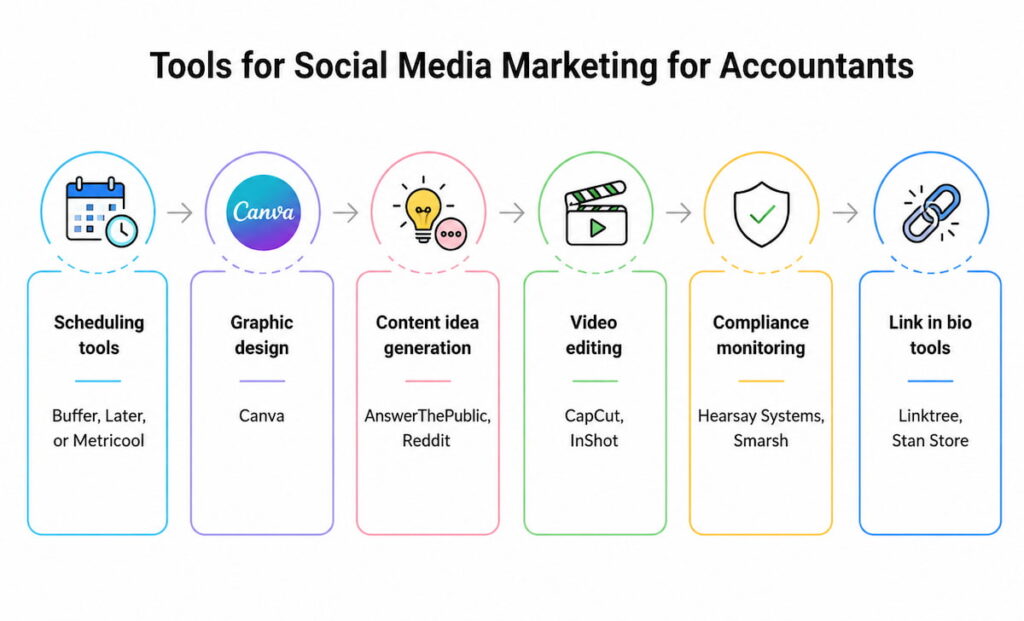
Scheduling Tools
Buffer, Later, or Metricool. These let you plan a month of posts in one sitting, then auto-publish. Never scramble for a daily post again.
Graphic Design
Canva is essential. It has thousands of templates for “tax tip” carousels, quote graphics, and infographics. No design degree required.
Content Idea Generation
AnswerThePublic or Reddit (r/tax, r/accounting) to see exactly what questions non-accountants are asking. Turn those questions into posts.
You can also create content around recurring industry topics that accountants frequently research, such as tax law updates, ethics training, or california cpe requirements, helping position your firm as a helpful source of professional knowledge for both clients and accounting professionals.
Video Editing
CapCut or InShot for editing short-form Reels and TikToks. Add captions—85% of social video is watched without sound.
Compliance Monitoring
For larger firms, tools like Hearsay Systems or Smarsh can archive posts for regulatory review. For solo practitioners, a simple two-person approval workflow (post drafted by junior, reviewed by partner) suffices.
Link in Bio Tools
Linktree or Stan Store allow you to have one “link in bio” that leads to multiple resources: “Book a consult,” “Download tax checklist,” “Watch webinar replay.”
Final Takeaway
Social media marketing for accountants is not a fad. It is the new business development pipeline. The firms that will thrive in the next decade are not necessarily the best with spreadsheets, but the best at communicating their value simply, consistently, and humanely online. Start small. Pick one goal, one platform, and one content pillar.
Post once a week for three months. Then measure, adjust, and grow. Your next great client is scrolling right now—make sure they can find you.