Talent alone won’t get you there anymore. That’s just how the industry works now. A while back, labels controlled everything. If they didn’t sign you, good luck getting heard. But that’s changed. Artists can reach fans directly now. And that direct connection is probably your biggest advantage.
That’s why social media marketing for musicians matters so much. It’s how you find listeners, build relationships, and keep people coming back.
Without it, even great songs can go unnoticed.
Why Social Media Marketing for Musicians is Essential
Social media matters a lot for musicians because it shifts the balance of power. Not too long ago, success depended almost entirely on gatekeepers. Radio stations or magazines could make or break your career.
Everything has changed. Here’s why it’s essential now:
- One good video can spread to way more people, and much quicker, than traditional media;
- It creates a two-way conversation between you and your fans;
- Fans get to see the process behind your music and feel more involved;
- That kind of involvement leads to stronger, longer-lasting loyalty;
- A solid following gives you more leverage with labels and venues;
- You can reach people directly instead of waiting for approval.
How to Set Goals for Social Media Marketing for Musicians
Before you put content out, figure out what you’re aiming for. No destination means any road works—but that’s a fast track to spinning your wheels, not building a career.
The SMART framework helps. Specific, measurable, achievable, relevant, and time-bound. From there, most goals fit into three categories.
Awareness goals are about reaching plain and simple. Examples? Grow followers by 20% in three months. Drive 10,000 monthly Spotify listeners through social media. Or get a single Reel to 50,000 people who haven’t found you yet.
The metrics here are pretty straightforward: impressions, reach, and new followers.
Engagement goals focus on deepening connection with your audience. Think averaging 100 comments per post. Or a 10% engagement rate on Stories. Or generating 500 DMs during release week. When engagement is high, algorithms take notice. That boosts your organic reach.
Conversion goals target the bottom line. Revenue and career milestones. Think pre-saves for a new single, ticket sales, merch revenue, or email sign-ups collected through social media.
When you separate goals into these tiers, you stop chasing vanity metrics. You start building something that actually lasts.
How to Choose the Right Platforms for Social Media Marketing for Musicians
Some artists think being on every platform is the way to go. It’s not. Spreading yourself too thin usually means nothing gets done well.
Effective social media marketing for musicians is about picking platforms that fit. Your genre, your skills, your audience. Two solid platforms beat six half-hearted ones.
Many artists use Instagram as their central platform. It supports a good mix of photos, short Reels, and Stories, so you can share both professional visuals and everyday behind-the-scenes content.
TikTok
Best for discovery. The algorithm is built to surface new creators. It favors trends, authenticity, and raw content. It’s not about having a perfect brand. It’s about creating things people want to engage with or replicate.
YouTube
Often overlooked, but YouTube is the second largest search engine. Great for long-form content like music videos, vlogs, and live sets. Also useful for cataloging your work, and YouTube Music gives another streaming angle.
X (formerly Twitter)
Best for artists who are good at conversation. Works well for networking with industry people and engaging super-fans. Less effective for broad discovery compared to visual platforms.
Discord
Good for building a dedicated community. Private servers let super-fans gather, get exclusive content, and interact without algorithm noise.
A good social media strategy often comes down to the hub and spoke model. Pick one platform to be your main hub. Post your original content there. Then repurpose it for your other platforms. It saves time and keeps everything consistent.
Content Strategy in Social Media Marketing for Musicians
Content strategy decides whether your social media actually works or just sits there collecting likes.
Here’s the thing, though it can’t be nonstop promotion. Keep asking fans to stream and buy, and they’ll scroll right past you.
The 80/20 rule helps a lot here. Make eighty percent of your content useful or entertaining. Only twenty percent should be straight-up selling.
Try breaking your content into four buckets to keep it organized:
The Art
Music videos, short audio clips, tour announcements, streaming links.
Music videos, short audio clips, tour announcements, streaming links, and creative tools such as a random music generator can all give you material to experiment with.
You need this stuff, but don’t make it feel like a hard sell. Invite people instead.
The Process
Let them see how you actually make the music. Studio vlogs, writing sessions, even the messy parts. People get way more invested once they see the real work.
The Person
Share who you are outside of music. Hobbies, daily life, funny moments. This is usually what turns random listeners into actual fans.
The Culture
Show you’re part of the bigger picture. Cover trending tracks, repost other artists, or jump into relevant conversations. It proves you’re not operating in a bubble.
Consistency is tough without some system. Many artists rely on a content calendar. Batching videos shooting several at once also makes life way easier.
Common Mistakes in Social Media Marketing for Musicians
Even with good intentions, a lot of artists fall into the same traps. Avoid these and you’ll actually see growth.
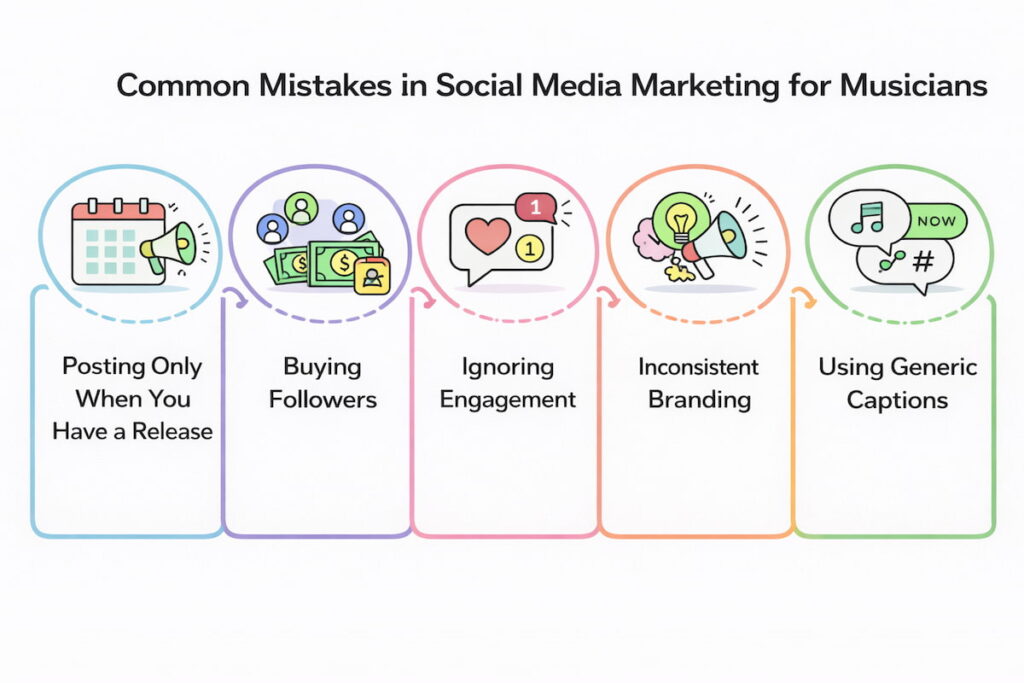
- Posting Only When You Have a Release. Go silent for months, then pop up asking for streams. It feels transactional. Audiences notice. Social media needs consistent attention;
- Buying Followers. It looks like a shortcut, but it usually backfires. When you have 100,000 followers and only ten likes per post, people notice. Labels notice. And algorithms basically ignore you;
- Ignoring Engagement. Social media is a two-way street. Posting and never replying misses the point. Even an emoji reply shows you’re paying attention;
- Inconsistent Branding. Switching up visuals, tone, or schedule confuses people. Stick with a consistent look and rhythm;
- Using Generic Captions. “New music out now” is a missed opportunity. Tell a story, ask a question, or give a call to action.
What Metrics Matter in Social Media Marketing for Musicians
Follower count is simple to check, but it doesn’t really show how well your social media is performing. Other numbers give you a much clearer idea of what’s actually working.
Here are the metrics worth tracking:
Engagement Rate
This is the percentage of followers who like, comment, share, or save your posts. 3–10% is a good range and usually signals stronger loyalty.
Click-Through Rate (CTR)
CTR measures how many people click your links to pre-saves or ticket sites. Low CTR often means the call to action is weak.
Saves and Shares
These are strong signals on Instagram and TikTok. Saves mean people want to revisit the content. Shares show they’re willing to recommend your music.
Follower Growth Rate
Look at the monthly growth percentage rather than the raw numbers. Steady 5–10% organic growth is more valuable than one-time viral spikes.
Conversion Metrics
Track what actually brings results: streams from your links, ticket sales from campaigns, and email sign-ups from social media.
These numbers help you focus on what really works for your career.
Tools for Social Media Marketing for Musicians
You don’t need a big budget. These social media marketing tools just make things simpler.
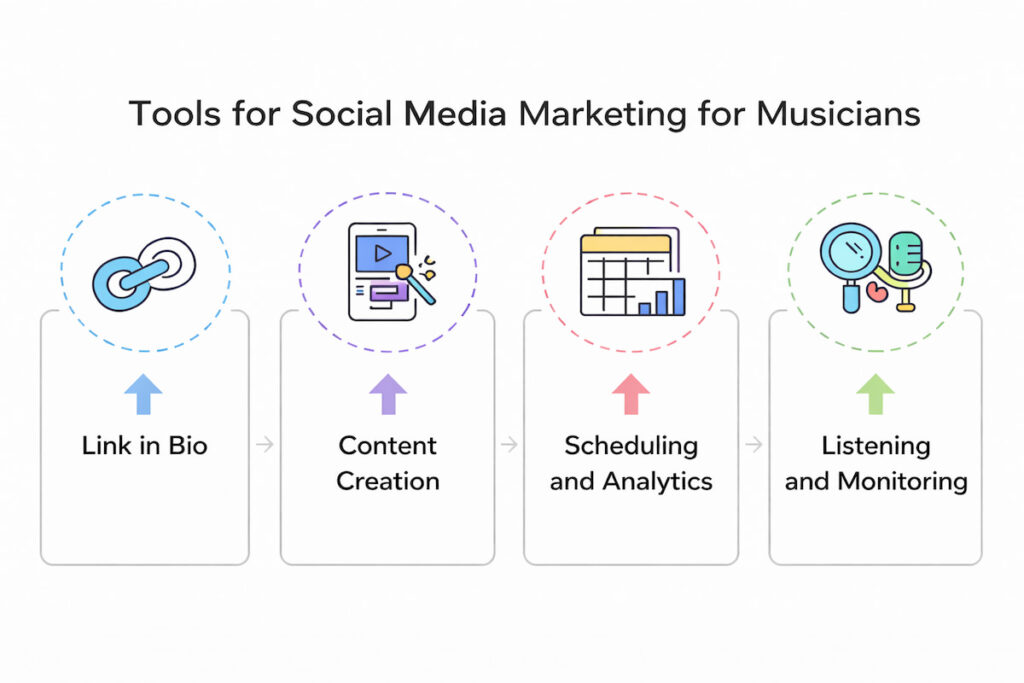
- Link in Bio: Use Linktree, Campsite, or Bento. They create one page with all your links Spotify, Apple Music, tour dates, merch, and email sign-ups. Some let you highlight whatever you’re promoting at the moment;
- Content Creation: Canva or Visme are perfect for graphics and lyric videos. CapCut is an easy choice for editing short videos that work well on TikTok;
- Scheduling and Analytics: Later, Buffer, and Metricool let you schedule posts and stay consistent. They also show you what content performs best;
- Listening and Monitoring: HypeAuditor and Social Blade help you understand your audience better and find fans using your music in their videos. Reposting that content is an easy way to get more engagement.
Conclusion
Social media has become one of the main ways musicians connect with fans. Learning to use it well is now essential.
Stop treating it only as a promotion. Instead, use it to build a community. Set specific goals, pick suitable platforms, mix your content, avoid typical pitfalls, and focus on useful metrics.
Doing so puts you in control and helps grow a loyal fan base that supports long-term success. It’s your choice how to use these tools.